The setup
CoreLogic’s Location Intelligence supplies broad, detailed property information to help Telcos plan new infrastructure, and better serve their clients.
Think about when they lay new fiber lines or build new cell towers. You need to know an areas flood risk, population density, bandwidth demands, etc. That’s the data that Telcos rely on CoreLogic for.

Because it wouldn’t be enough just to make some pretty ads with off-the-cuff headlines, we started with concepting. What would be the consistent theme across every ad.
For me, coming up with concepts is often best done by writing. So I gathered everything I knew about the project, from the buyer personas to my favorite marketing advice, into Figjam, and started writing headlines.
I don’t stop to criticize things for too long. I mostly just try to let one idea spark another, and another. Until I have enough that I can look back and find the common threads.
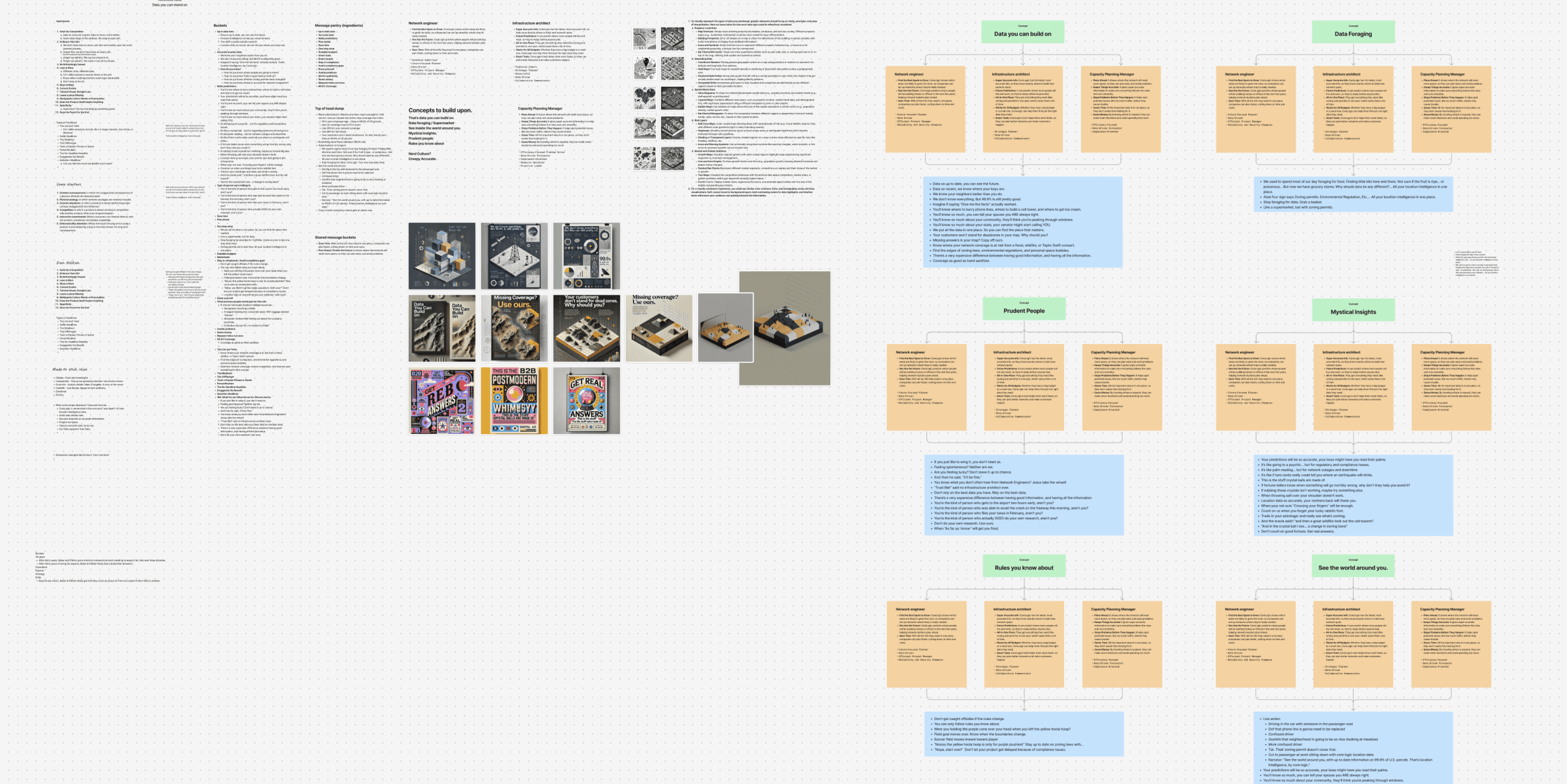
In the end, there were three ideas that I wanted to share with our team at Pennebaker.
Data You Can Build On
Using the atomic model of design, and combining autolayout with all of our common components, our wireframes files alone became a more robust system than the final versions a lot of teams hand off to their poor developers.
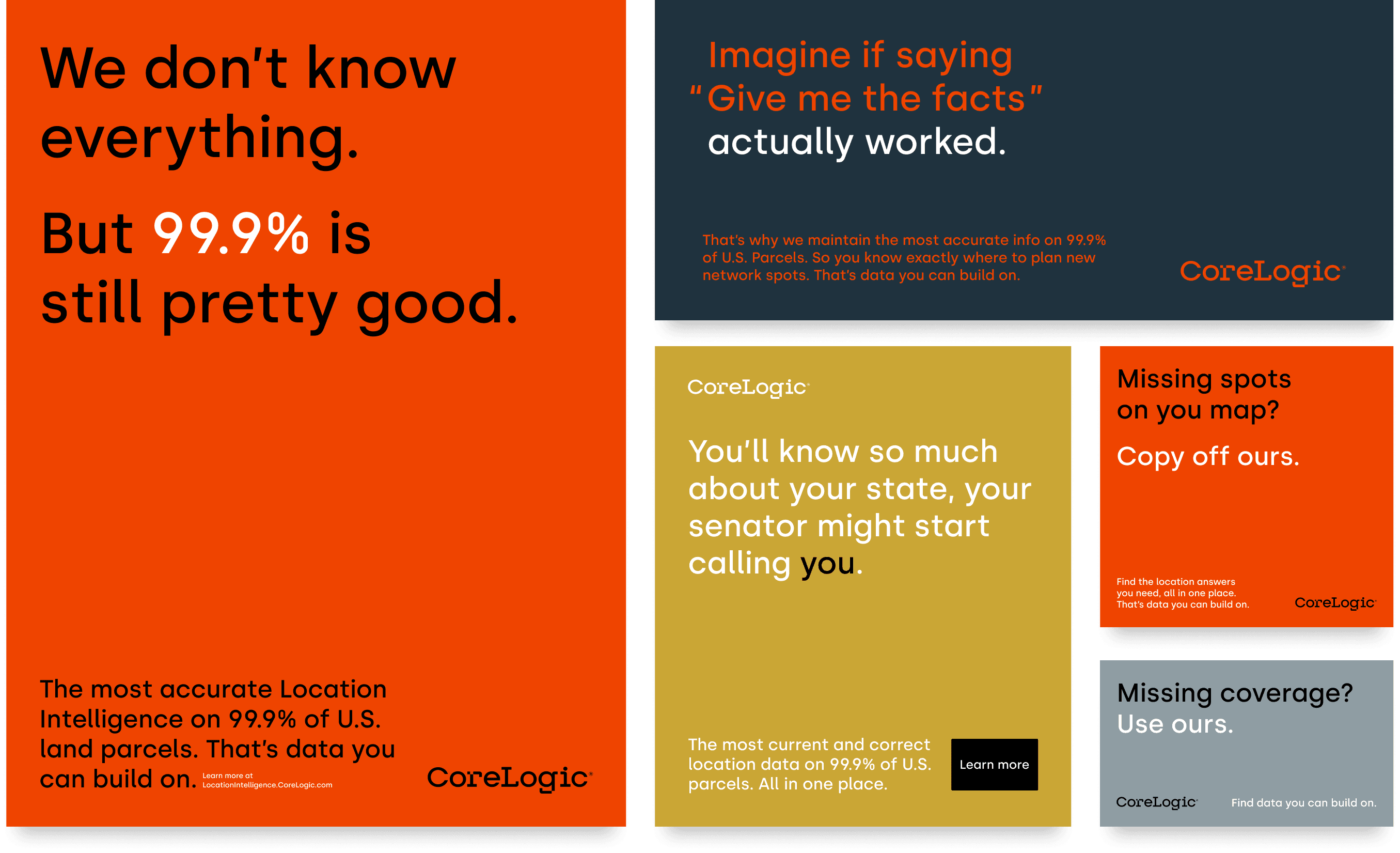
Prudent People
The pages respected content flow, moving sections around was as simple as hitting an arrow key, and dev never again had to ask us whether we really needed both the 86px gap and the 81px gap they found in different parts of our designs.
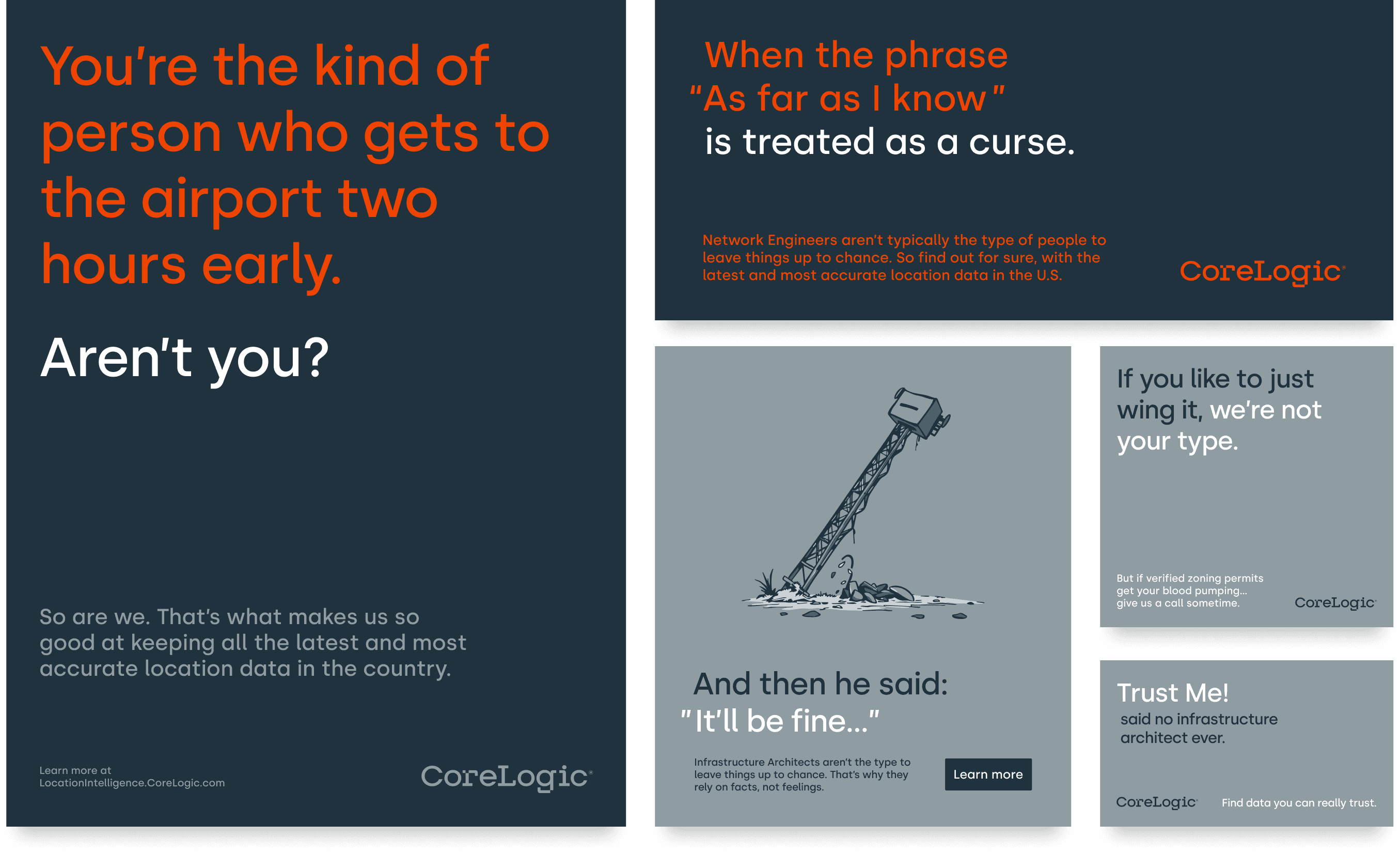
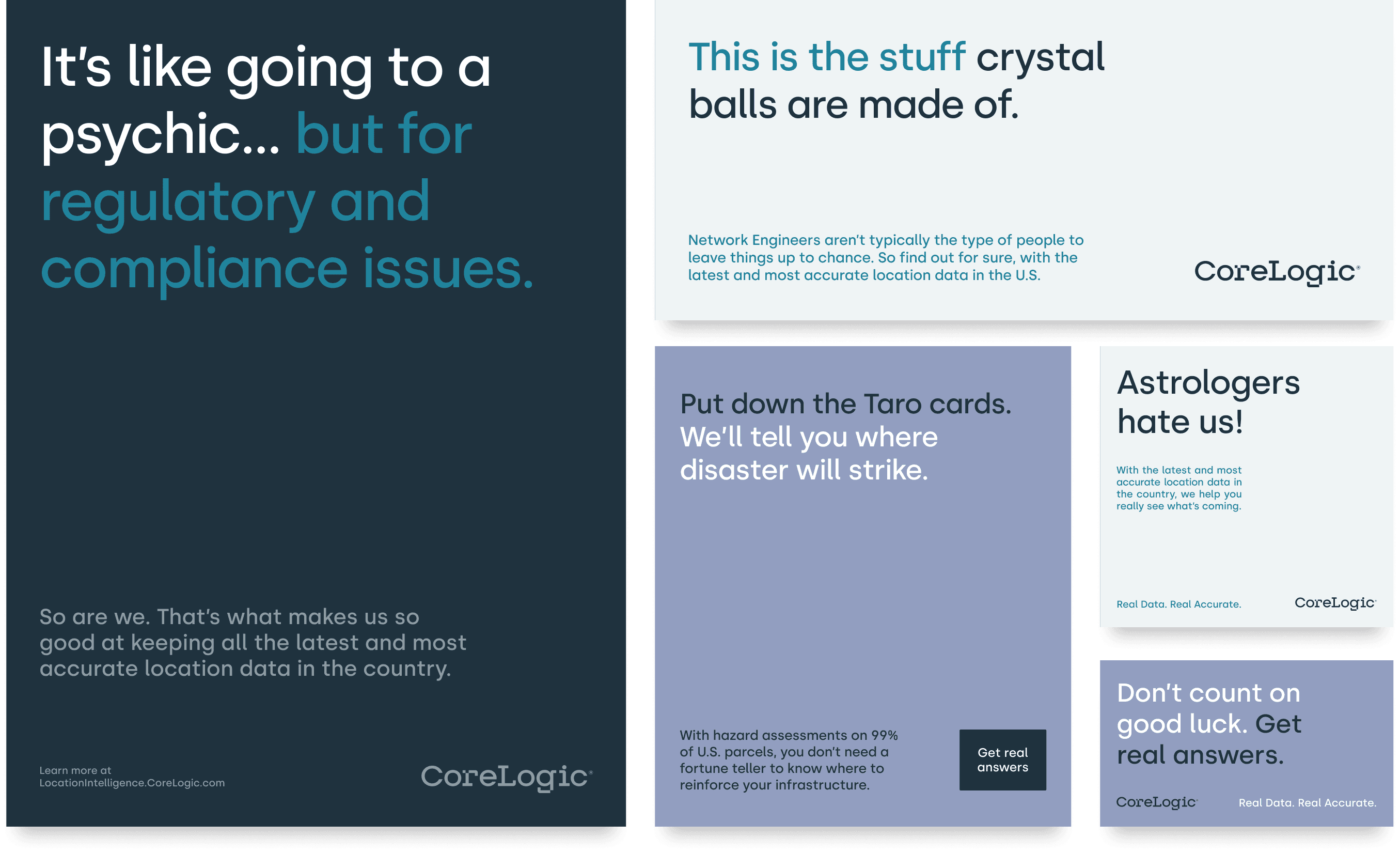
Get Real Answers
The pages respected content flow, moving sections around was as simple as hitting an arrow key, and dev never again had to ask us whether we really needed both the 86px gap and the 81px gap they found in different parts of our designs.
Perhaps it comes easier to other designers, but developing a look and feel for me is usually a more meandering process of trial and error. Luckily I had great advisors in Bryant Ju, Alyssa Oliver, and Katie McKay.
This was also the height of designers trying to figure out how AI might affect our process. So on this project, I used a combination of ChatGPT, reference imagery, and early experiments to iterate into the final look.
Direction 1: Data You Can Build On
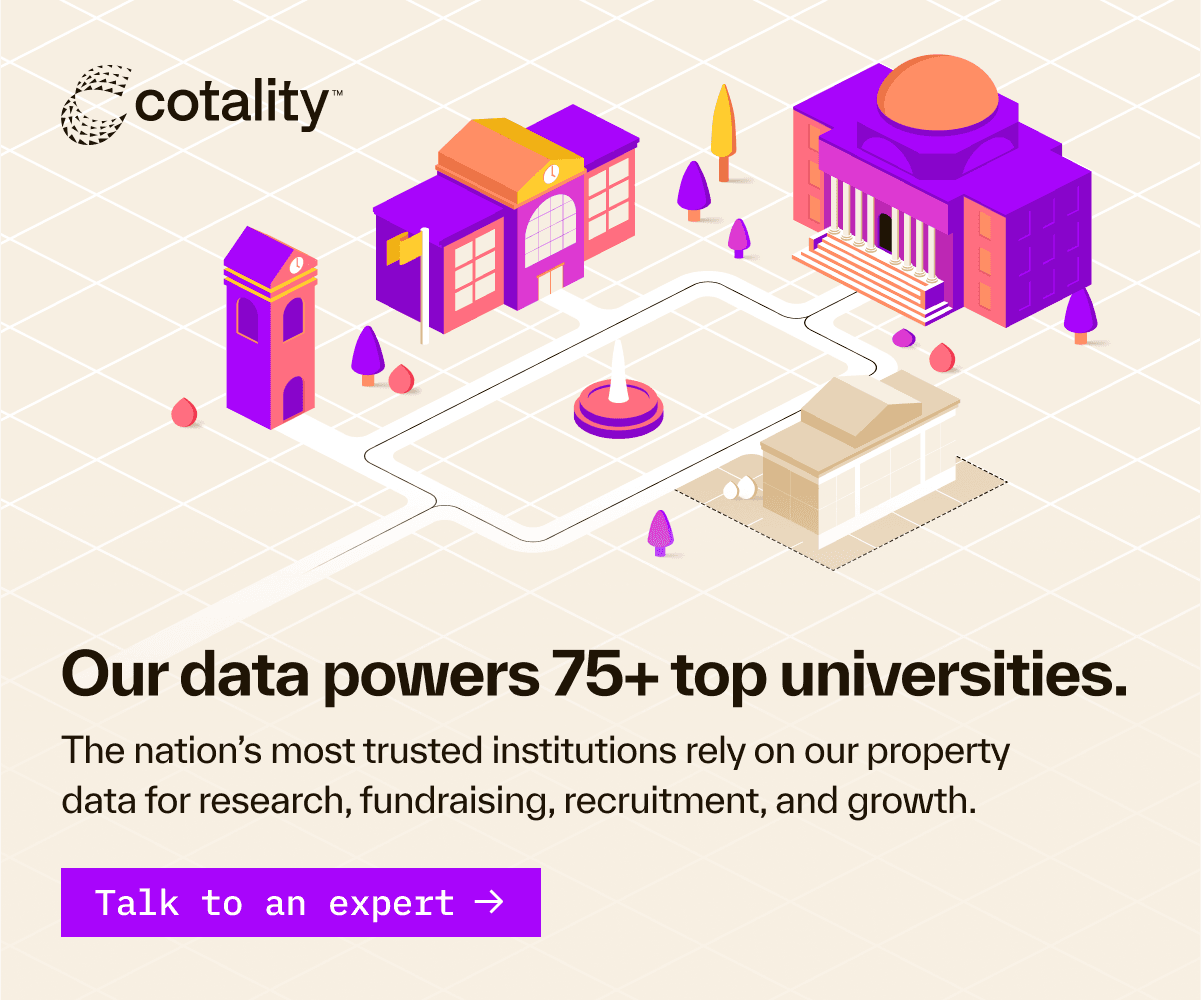
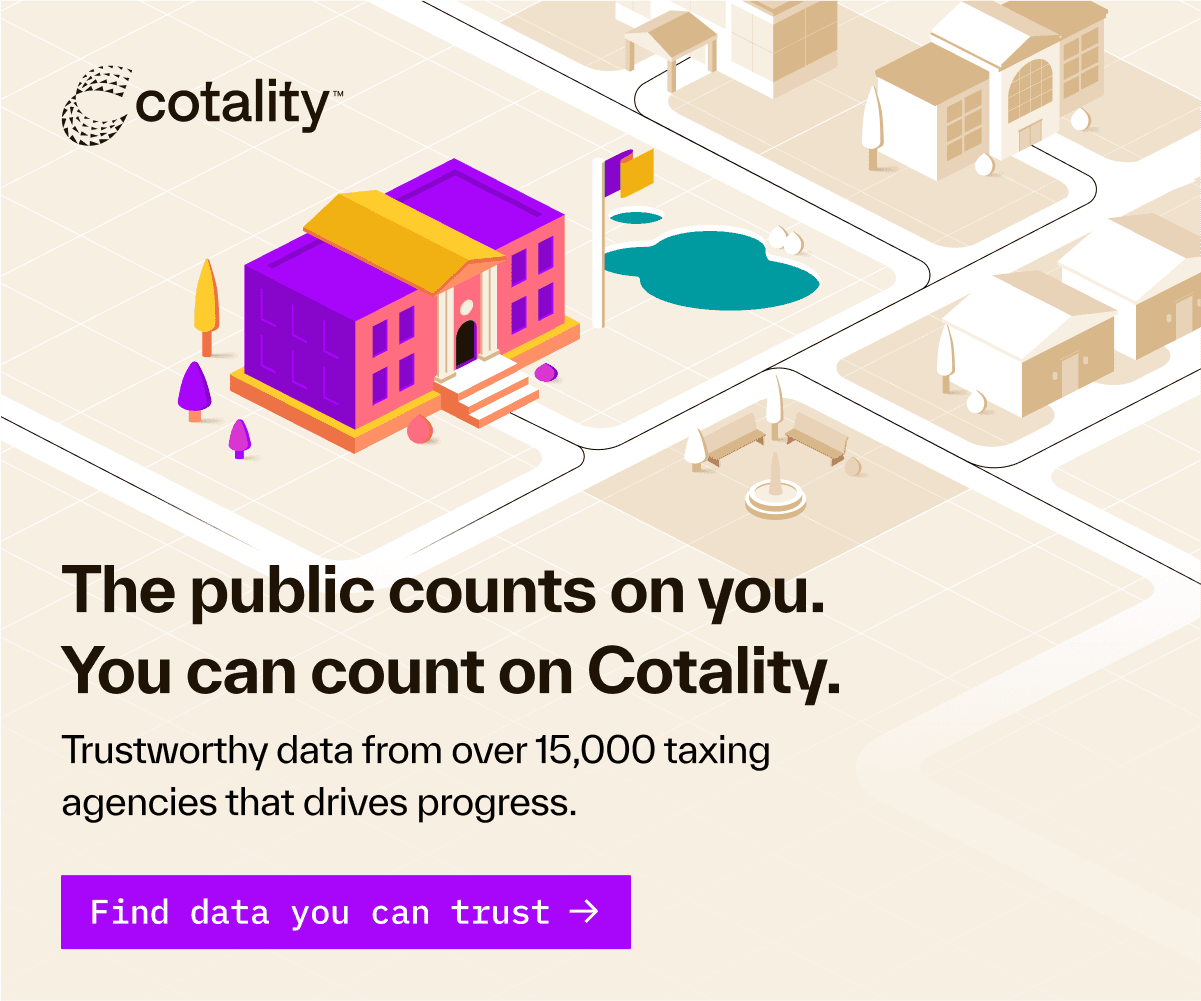
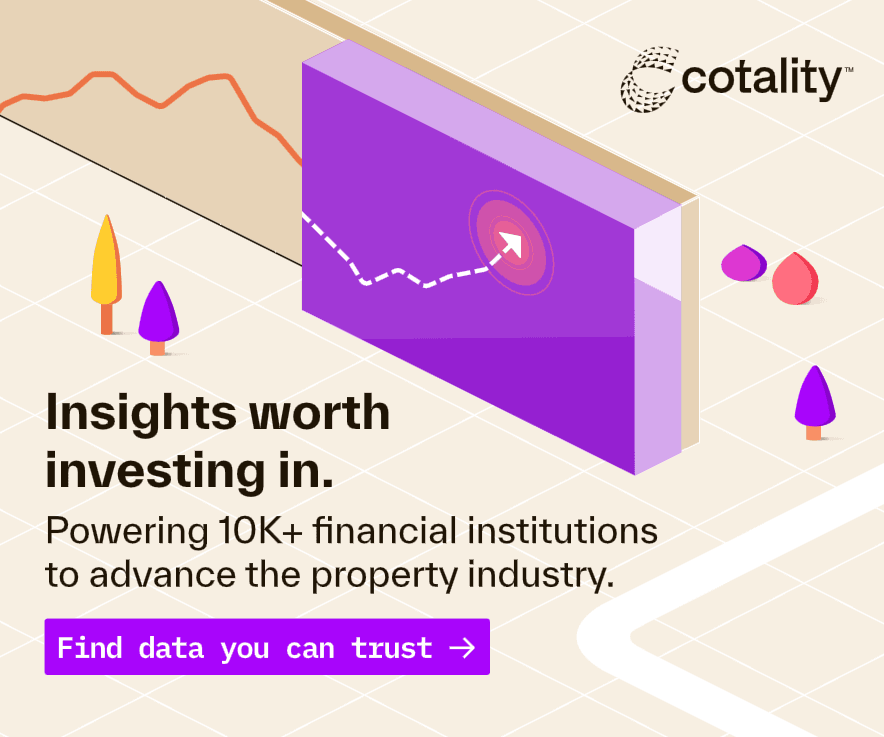
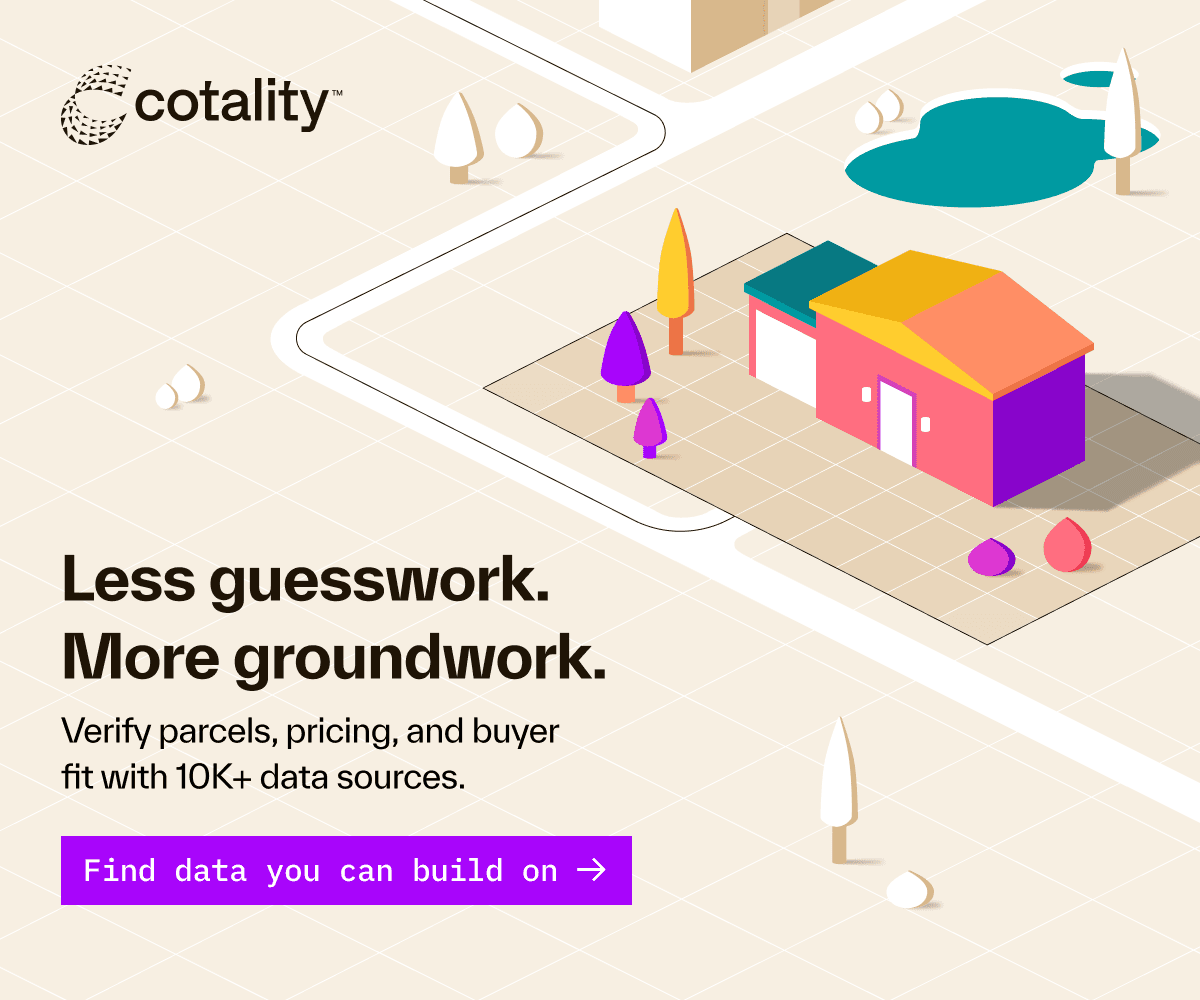
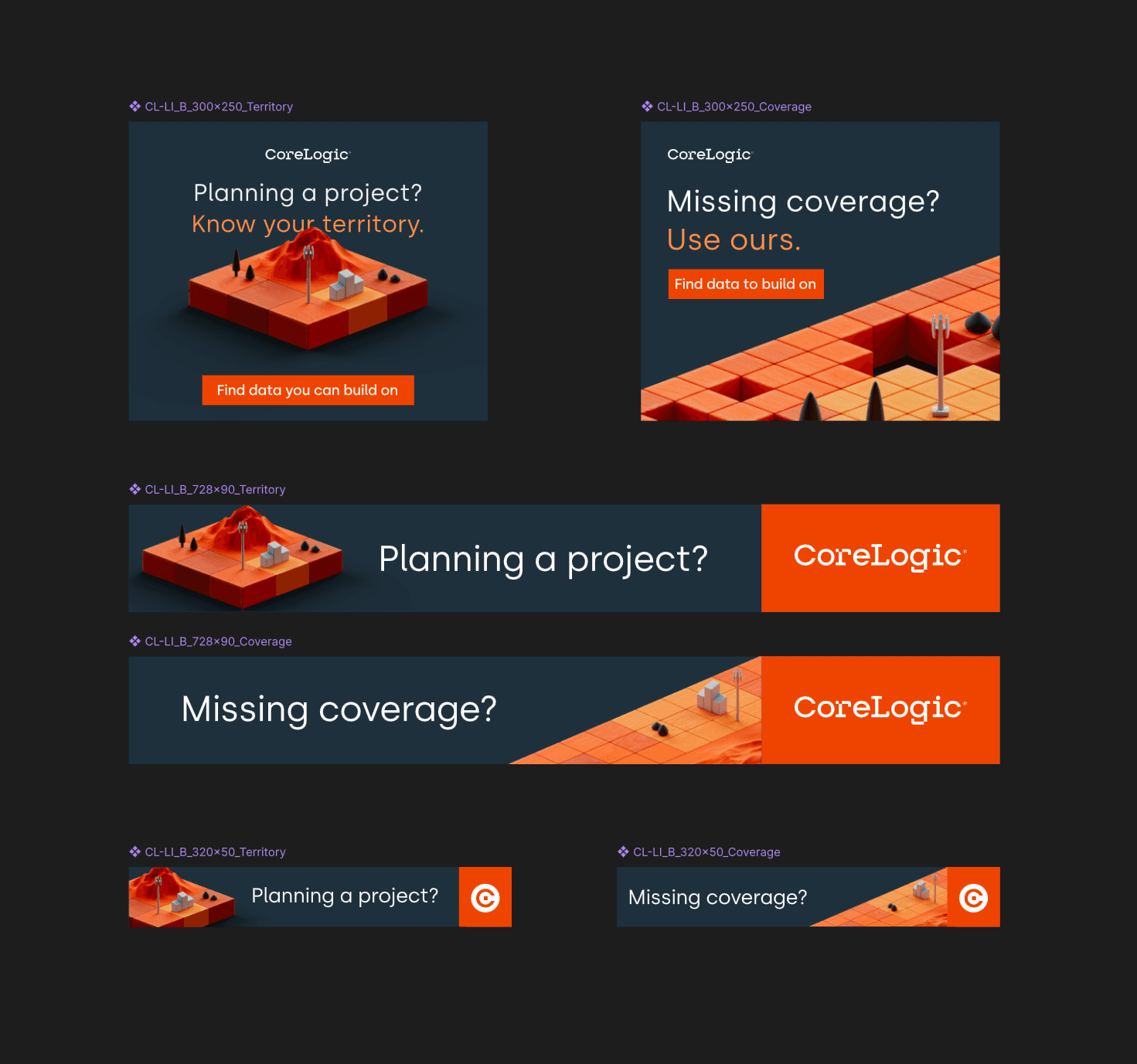
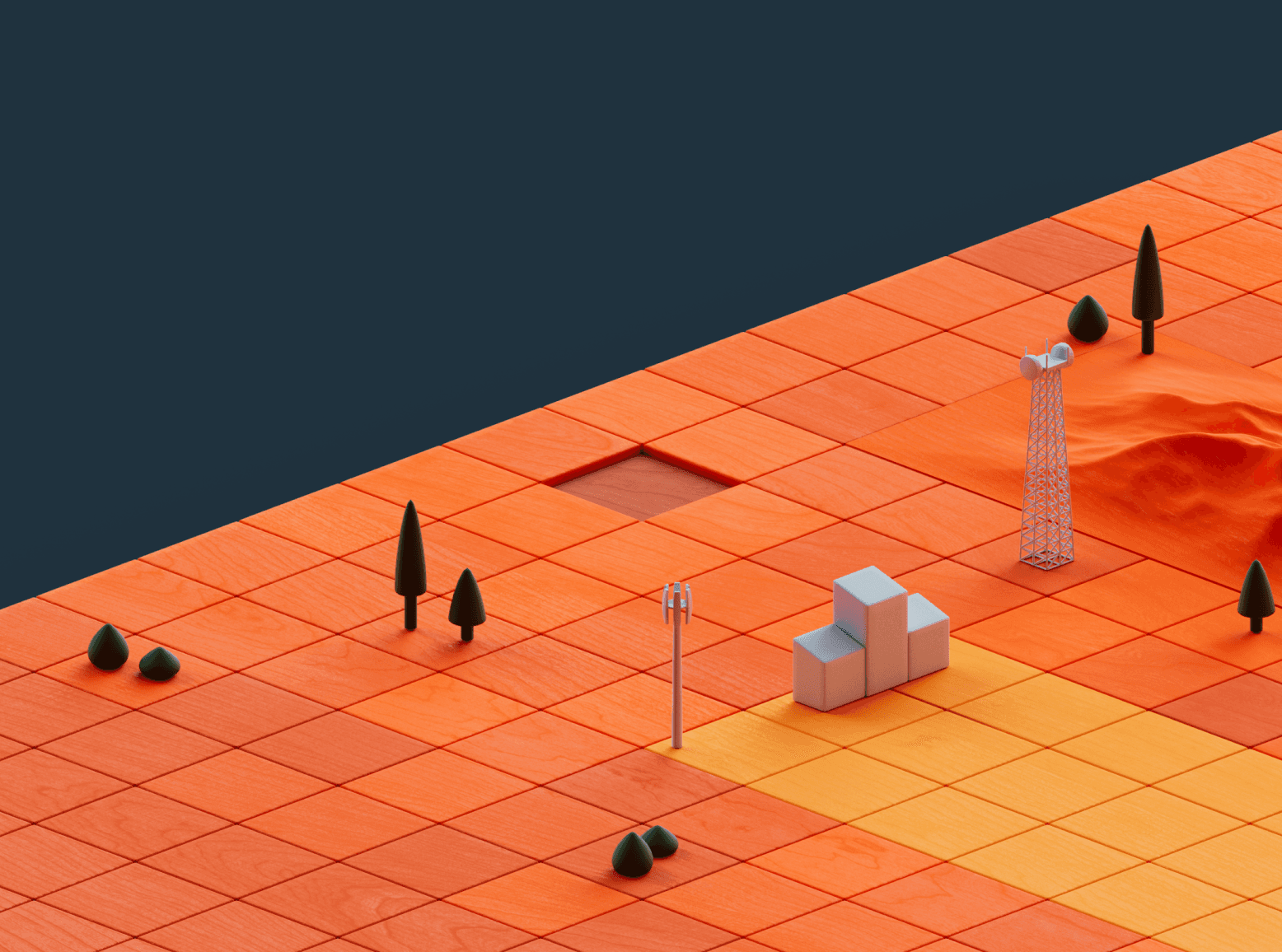
Inspired by the idea of our CoreLogic’s audience using this data to plan their projects by getting a view of the data landscape, I wanted to explore using 3D to create small scenes that felt like looking down on dioramas or map boards. Leaning into the brands complimentary color palette, I created scenes for each headline that felt simple, clear, and intentional.
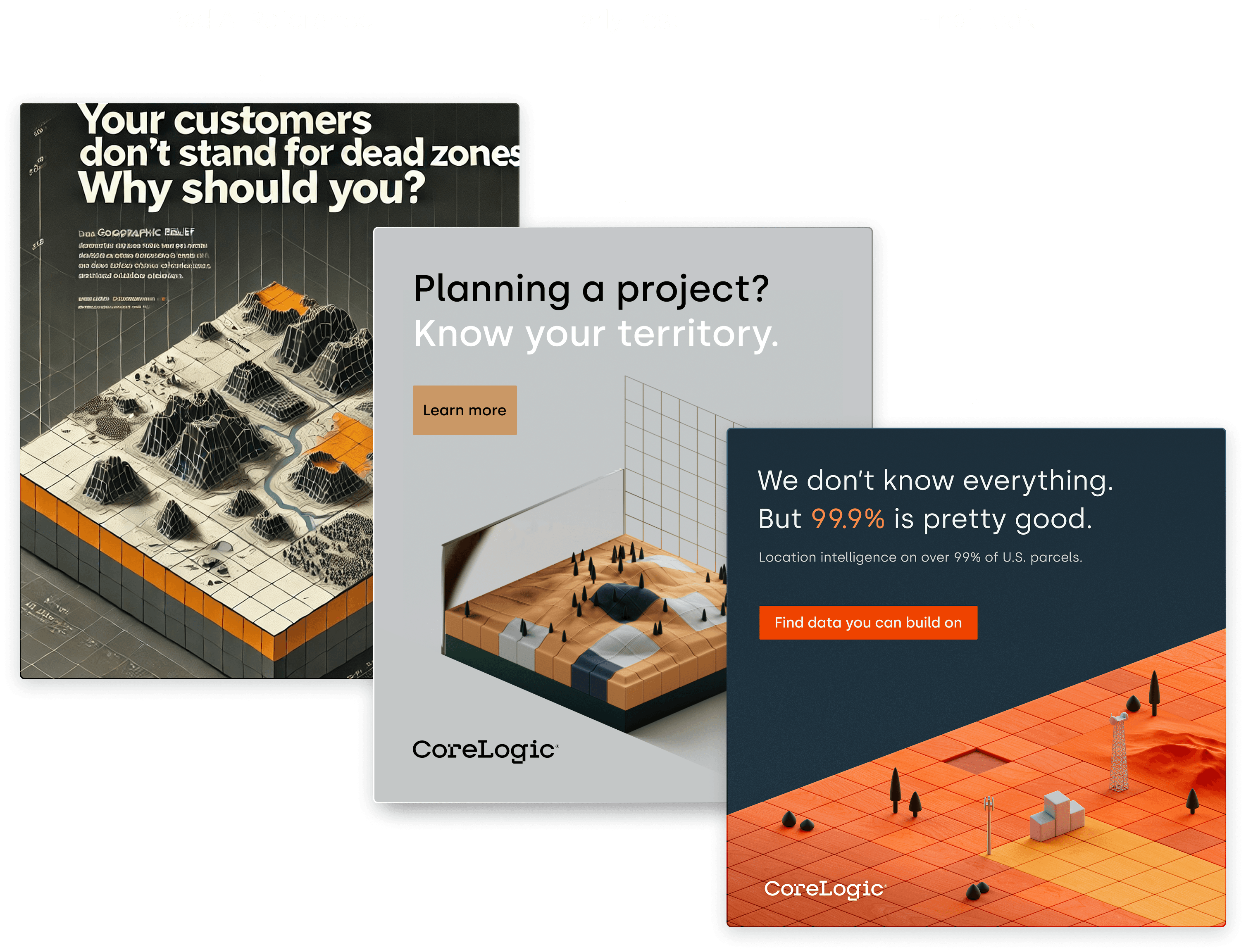
Direction 2: Prudent People
One of the things that the client had mentioned was that their data is both broad and deep. Down to having specific flood histories on individual properties. Combine very technical data with an elevated, analytical feel, and the work of Carl Hauser immediately sprang to mind. I created a quick test render to use as the looks proof of concept to test the clients appetite for tone and whether they would want us to hire a third party like Carl.
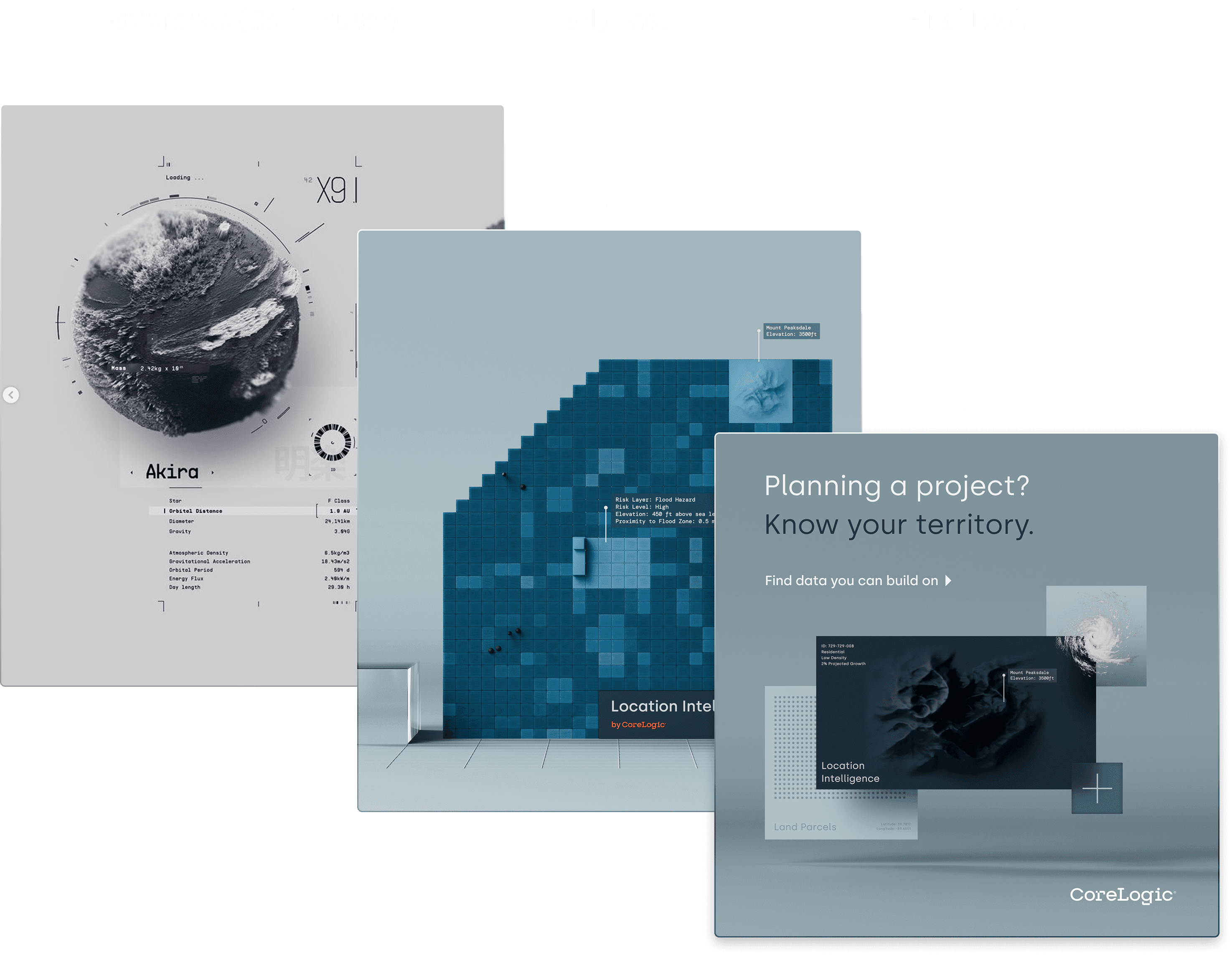
Direction 3: Get Real Answers
Knowing that the headlines were on the whimsical side of things, we wanted to look at using their secondary palette that didn’t get much use to bolster a different look for the brand. Essentially, the cool secondary colors would represent the mystical parts of our headline, and end with CoreLogic’s orange; the grounded antidote to the ambiguous superstitions. Illustrations and the final look were created by the pinkest metalhead you’ll ever meet, Alyssa Oliver.
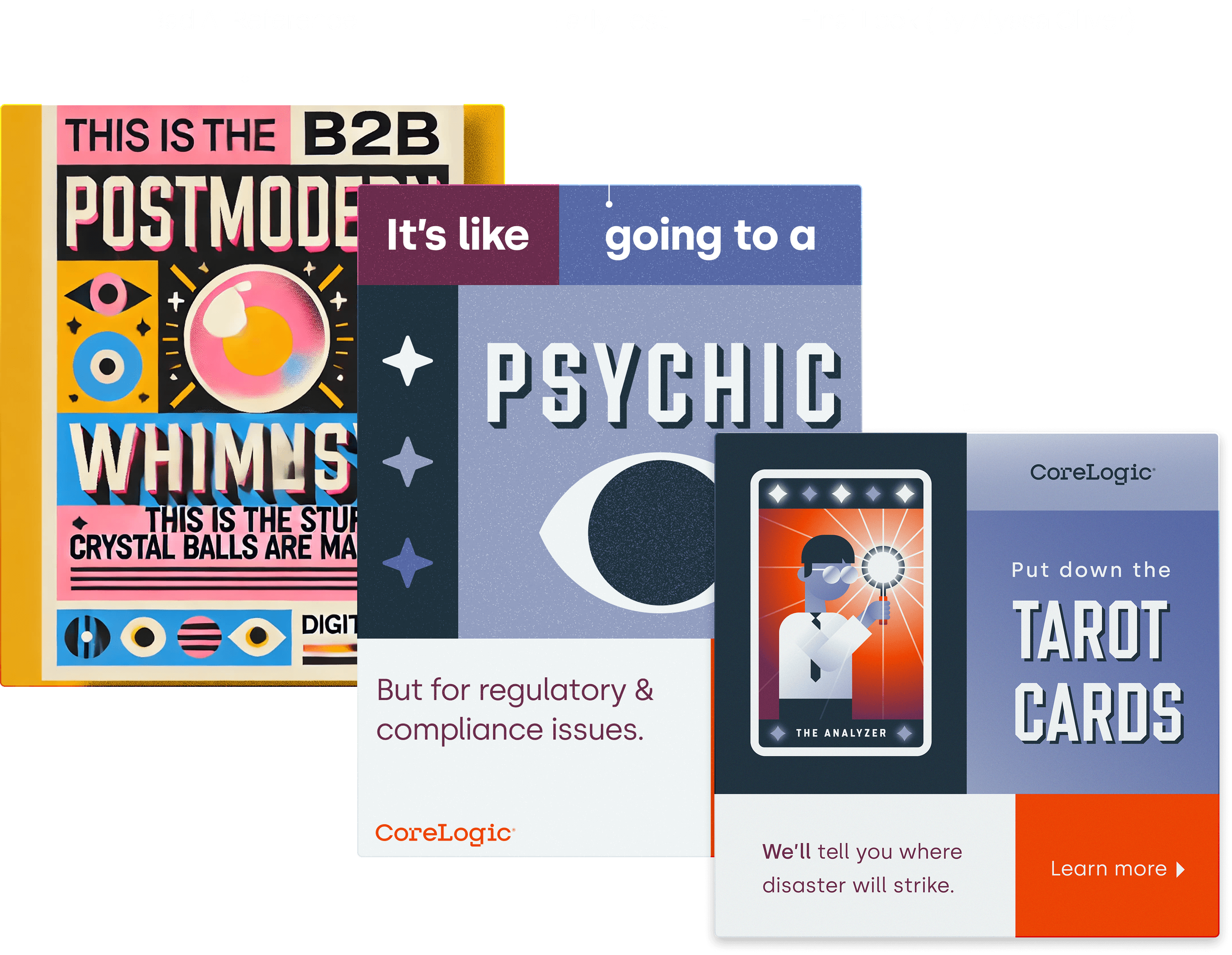
The client decided to hold the spicy option for a future campaign, and use “Data You Can build On” for this initial run. It would also be A/B tested against another direction designed by the absolutely fabulous Bryant Ju.
We went through a couple rounds of edits, and added two more ads to the set. Creating each 3D scene in Cinema 4D, laying them out in Figma, animating them in Rive, and embedding those into HTML files.
I handled most aspects of their creation. But crucially with the help of Hayden Taylor for additional writing, Katie McKay for art direction, and Spenser Hannon for code support integrating the ads with the clients platform.

Designed in Figma | 3D Rendered in C4D | Animated in Rive | Embedded into HTML


Let's wrap it up
Anyone who's sent out digital ads knows how restrictive the platforms are. Tiny file size requirements and no option for 2x variants usually means your ads look like potatoes on todays high-density displays. That, or you have a developer help code them up.
But by embedding Rives into HTML files, those problems become irrelevant. Our ads could scale to any size and device, animate at 60fps, include interactive elements like buttons with hover states, and still come in around 4kb.

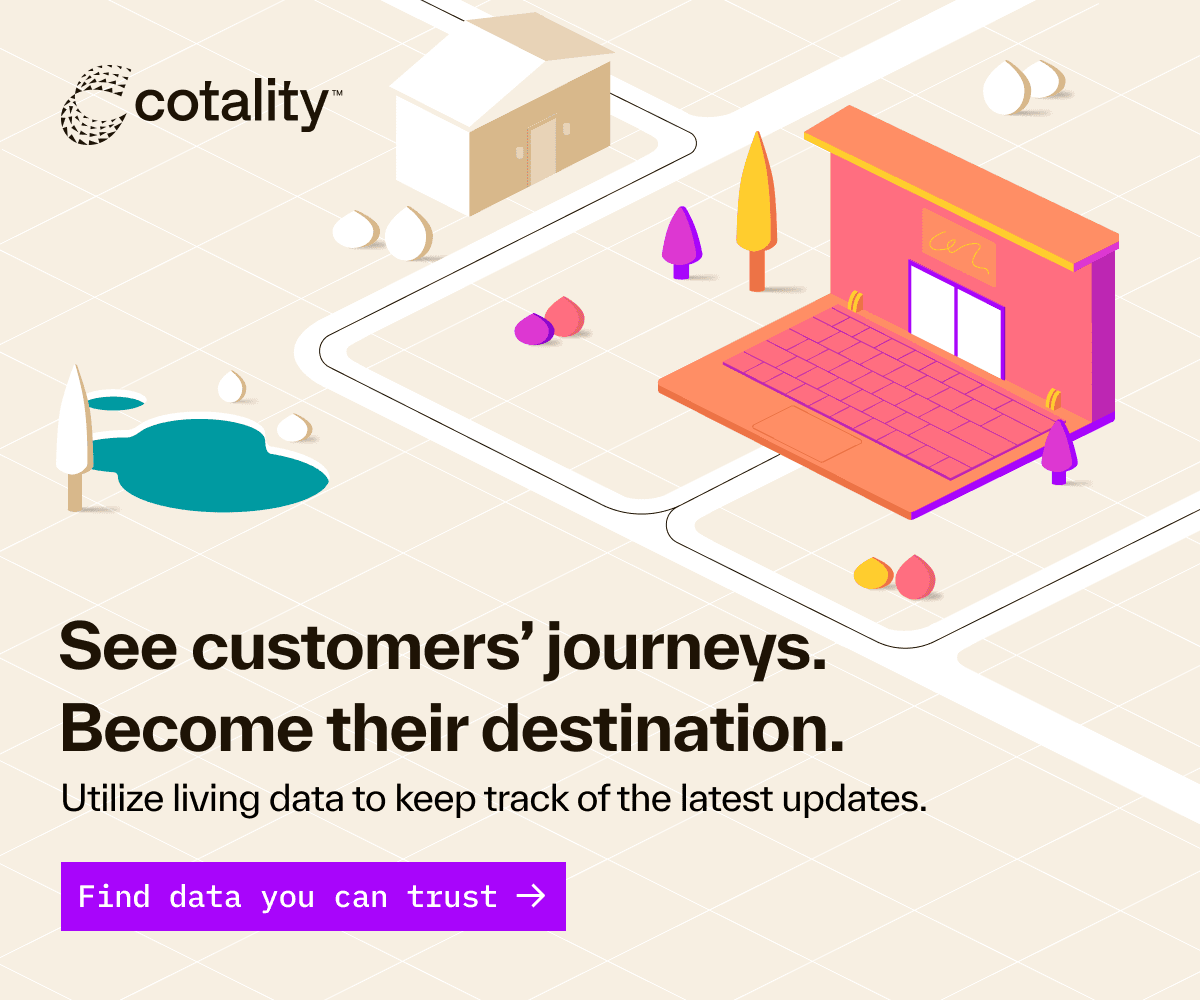
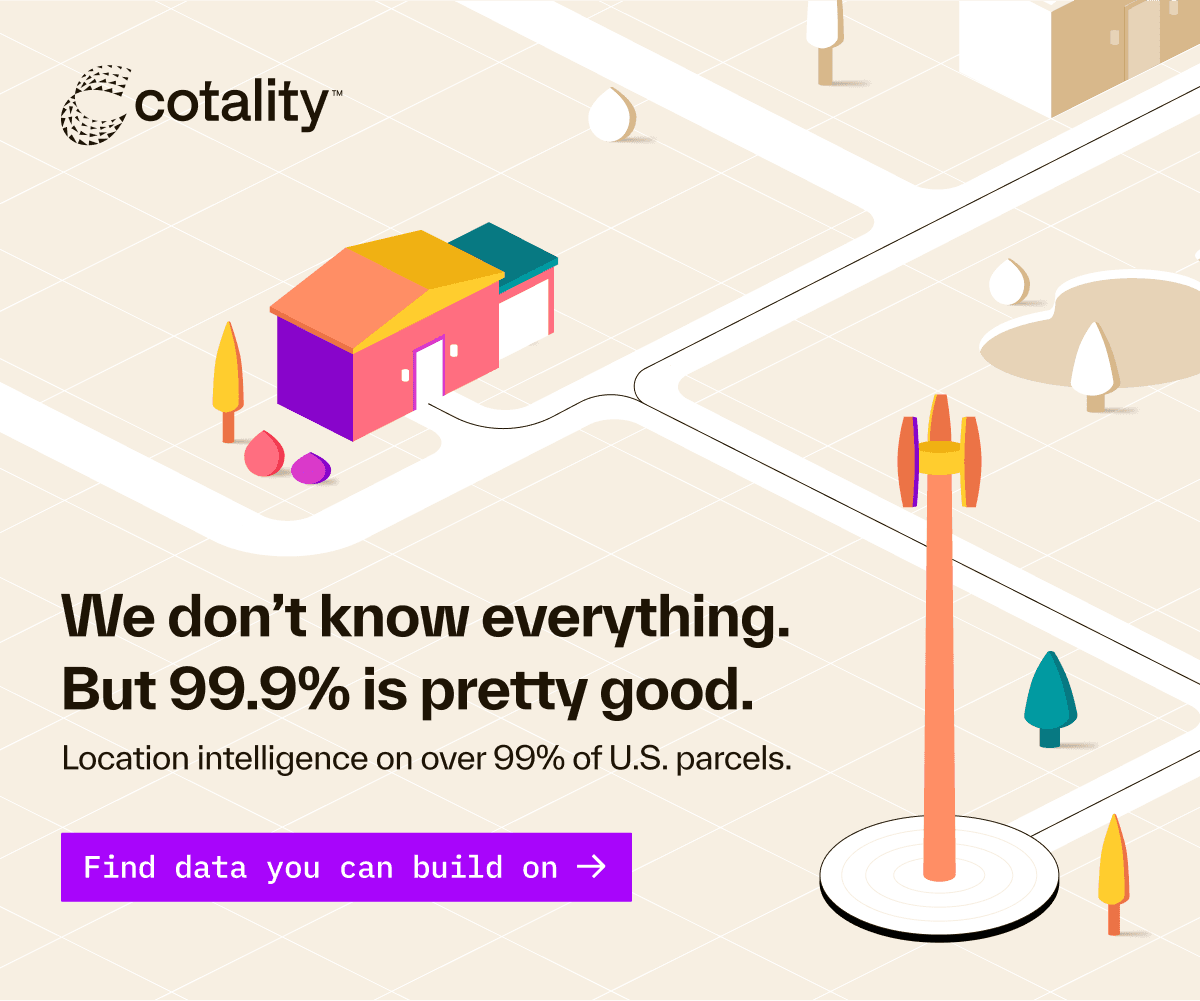
Months later, CoreLogic announced they were rebranding as Cotality. The campaign had performed well for them, and so they came back to refresh the ads in the new Cotality look and feel.
But the Telco division wasn’t the only department who wanted in on the ads. Their teams from residential, financial, retail, government, and higher education also wanted ads of their own.
So after some new exploration, writing, animation, and production, we created a total of 36 new animated deliverables. An ad for each of the six teams, in three sizes, with two sets of copy.